Cooking on induction
Cooking with an induction hob takes some getting used to for many people. No flame, no visible fire, but direct heat. Induction responds quickly, is energy efficient and offers a high degree of control. This makes induction cooking popular, but it also requires a slightly different approach than cooking with gas. With the right pan and a few good habits, you can get a lot of enjoyment out of it.
What exactly is induction cooking?
When cooking on induction, the pan itself is heated by a magnetic field. The hob remains relatively cool, while the bottom of the pan heats up very quickly. This means less heat loss and a rapid response to temperature changes. Like to reduce the power a bit? You will notice it right away. This is particularly useful for sauces, fish or delicate dishes.
Which pan is suitable for induction?
Not every pan is suitable for induction cooking. The base must be magnetic and flat in order to make contact with the hob. Pans that are suitable for induction include cast iron pans, sheet steel frying pans, or stainless steel frying pans. As you can see, that's more pans than you think!
Pans that do not work on induction hobs are made entirely of copper, aluminum, glass or ceramic, and some types of stainless steel without a magnetic base. Luckily, many modern pans have a steel base and are therefore suitable for induction hobs. Also pay attention to the shape of the base. The base must be flat in order to make contact with the hob. “Poffertjes” pans and grill plates therefore often cause frustration because they do not fit properly everywhere. Always check the product specifications to ensure that a pan is suitable for induction.
Popular pans for induction cooking:

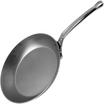

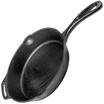


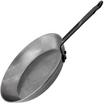

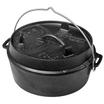

Learning to cook on induction
Anyone who switches from gas to induction will quickly notice that cooking feels different. Induction is powerful and responds immediately, meaning that small mistakes are punished more quickly. Quickly selecting a high setting can generate a significant amount of heat. Learning to cook on induction is therefore mainly about measuring. Allow the pan to reach the right temperature, gradually increase the heat and stir a little more often so that the heat is distributed evenly.
Important warranty notice!
Never set a pan directly to setting 7 or higher. The soil then heats up too quickly and too locally, which greatly increases the risk of warping. Sudden temperature changes also play a major role in this. Consider, for example, rinsing a hot pan directly under the tap to clean it. The material is affected by the temperature difference and may deform as a result. A warped pan is less pleasant to cook with, and this damage is not covered by the warranty. Building up slowly and allowing to cool down is therefore not just a casual tip, but something to really take into account.
Therefore, always start slightly lower than you are used to. With induction, you can turn up the heat in a matter of seconds, but burnt food or a warped pan is not so easy to repair.
6 tips for cooking on induction:
- Ensure that your pan is suitable for induction
Make sure that your pan is as flat as possible and made of a material suitable for induction (sheet steel, cast iron, or stainless steel).
- Increase the power gradually
This also applies to cooking with gas, but even more so to induction! By heating gradually, you prevent tension in the base of the pan and the risk of warping.
- Use pans with a flat base
A flat, sturdy base makes good contact with the hob and distributes the heat evenly.
- Lift the pan rather than slide it
Sliding causes scratches on the hob and extra wear on the bottom of the pan.
- Never heat an empty pan on a high setting
Without contents, a pan becomes extremely hot very quickly. This increases the risk of warping and may damage the non-stick coating.
- Clean the pan thoroughly before and after use
Dirt or moisture reduces contact, causes uneven heat distribution and can burn onto the hob or the bottom of your pan.
Which is cheaper: cooking with gas or induction?
In most households, cooking with induction is cheaper than cooking with gas. Induction is more efficient because virtually all the energy goes directly into the pan. With gas, some of the heat is lost along the pan. With today's energy prices, and particularly if you have solar panels, induction cooking is often more cost-effective. In addition, induction is faster, which saves on cooking time and energy consumption.
Once you get the hang of it, you will realise that cooking on induction is actually very pleasant. Quick, clean and controlled. With the right pan and a little attention in the beginning, cooking on induction quickly becomes second nature.
Looking for a pan that is suitable for induction? See all pans for induction here!


?%24center=center&%24poi=poi&%24product-image%24=&fmt=auto&h=500&poi=%7B%24this.metadata.pointOfInterest.x%7D%2C%7B%24this.metadata.pointOfInterest.y%7D%2C%7B%24this.metadata.pointOfInterest.w%7D%2C%7B%24this.metadata.pointOfInterest.h%7D&scaleFit=%7B%28%24this.metadata.pointOfInterest%29%3F%24poi%3A%24center%7D&sm=c&w=1208)

