
You have an outdated webbrowser. The website might not work correctly.
The santoku is an iconic Japanese kitchen knife. It is the Japanese version of the chef's knife. The word santoku means: three virtues. According to some, this refers to the cutting, crushing and scooping qualities that the santoku is known for. Others say it stands for meat, fish and vegetables. The three ingredients that can easily be cut with a santoku. All we know is that a santoku is an incredibly versatile kitchen knife that is perfect when cutting, crushing and scooping meat, fish and vegetables.
Looking for a santoku knife that’s a cut above the rest?
Don't panic, we'll help you find it!
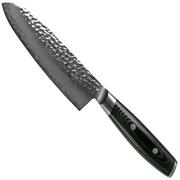

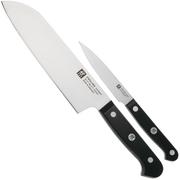

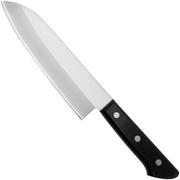


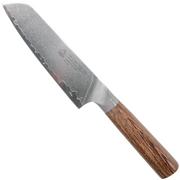


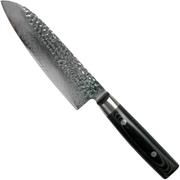

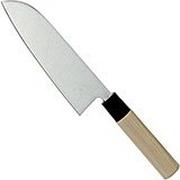


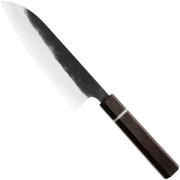

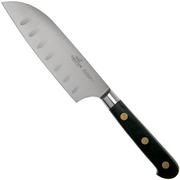

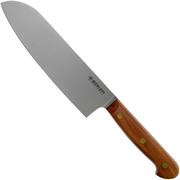

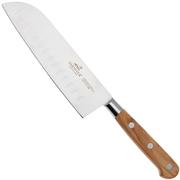

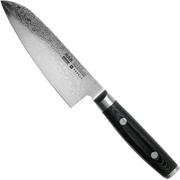

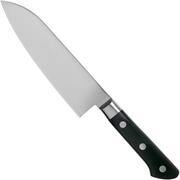

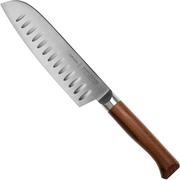

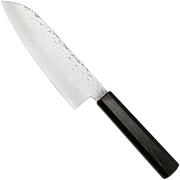

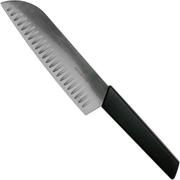


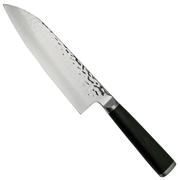


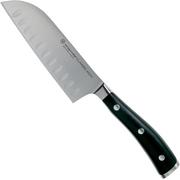


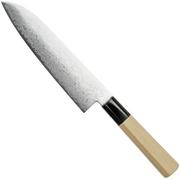

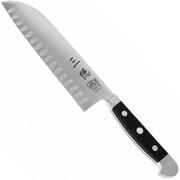


A Japanese santoku knife is a versatile kitchen knife that originates from Japan. Think of it as the Japanese equivalent of the classic chef’s knife. You use a santoku for cutting vegetables, meat and fish. That’s precisely why it’s such a popular knife in the kitchen: one knife that can do so much. View all Japanese chef’s knives here.
A Japanese knife set often includes a santoku knife because of its versatility. That's why a santoku knife set that includes other Japanese kitchen knives is a good choice if you want to tackle a wide range of cutting tasks. If you prefer to keep your knives neatly organised and within easy reach, a santoku knife block is an excellent addition to your kitchen.
The handle of a santoku is often located at the same height as the spine of the blade. As such the hand you use to hold the knife has a lot of room when you use the knife. In addition, some santokus, like many other Japanese knives, are enhanced with D-shaped handles. Keep in mind that this could mean that the knife is meant for left or right-handed use. You should pay close attention to this when you purchase a santoku or other Japanese kitchen knife.
Another important consideration is the steel type of the blade. Many traditional Japanese santoku knives have a blade made of carbon steel. For example, Aogami (blue paper steel). This means the steel is incredibly hard, and very easy to sharpen to razor-sharpness. However, it also means that the blade is not stainless. A patina will form in time, and if you're not careful, rust can form too. A damascus santoku knife is a very special highlight in your kitchen and combines Japanese cutting performance with a striking appearance.
A santoku knife originated in Japan, but the design has since become popular worldwide. As a result, the santoku knife from Japan is now also available in other styles, including Laguiole. A Laguiole santoku knife combines the versatile shape of a santoku with a classic French design.
Victorinox is a world-famous Swiss company that offers high-quality kitchen knives at reasonable prices, as well as pocket knives and multi-tools. It's no surprise, that Victorinox also makes santoku knives alongside a range of other Japanese-style knives.
Lion Sabatier is known for its top-quality kitchen knives. Besides classic European kitchen knives, the range also includes Japanese knives, such as the Sabatier santoku knife.
For daily maintenance of a santoku knife we recommend a ceramic sharpening rod like the Skerper Basic ceramic sharpening steel. A honing steel often does little on such a hard type of steel and does not remove any material. A sharpening rod actually sharpens your knife. Read more about sharpening and maintaining a Japanese knife in our article.
The biggest difference is in the shape of the blade. While a chef's knife has a pointed tip, the spine of a santoku slopes down towards the edge. As a result, the two knives are better suited to different cutting techniques. However, both can be used to cut the same ingredients. Which one you choose ultimately comes down to personal preference. But what exactly are those different cutting techniques? Read more about it in our topic "Chef’s knife vs santoku: What are the differences".
A santoku is a versatile Japanese kitchen knife designed for cutting meat, fish and vegetables. A nakiri is a traditional Japanese vegetable knife with a rectangular blade, specially designed for cutting vegetables and chopping herbs. If you want one knife for a variety of ingredients, choose a santoku. If you mainly prepare vegetables, a nakiri is the better choice.
Both knife styles originate in Japan and are true all-rounders in the kitchen. Yet they feel very different in use. The biggest difference lies in the shape of the blade, the cutting technique and the style of the knife. Want to know more? Check out our article about the difference between a gyuto and a santoku knife.
Can’t find what you’re looking for? View all Japanese knives here.